
Struggling to maintain an engaging social media presence for your law firm?
You’re not alone.
While 96% of law firms maintain social media profiles, only 70% actively post content – and even fewer do it effectively.
This comprehensive guide for 2024 delivers 101 actionable social media post ideas specifically designed for law firms, complete with real examples and implementation strategies.
Whether you’re a solo practitioner or managing a large firm’s social media, you’ll find practical, engagement-driving ideas that go beyond generic legal posts. Let’s transform your social media presence from a professional obligation into a powerful client acquisition tool.
If you’re just starting a new law firm, we highly recommend you reading our guide on law firm name ideas and how to choose a lawyer domain name.
Ready-to-Use 101 Social Media Post Ideas
Educational Content Ideas (25 Examples)
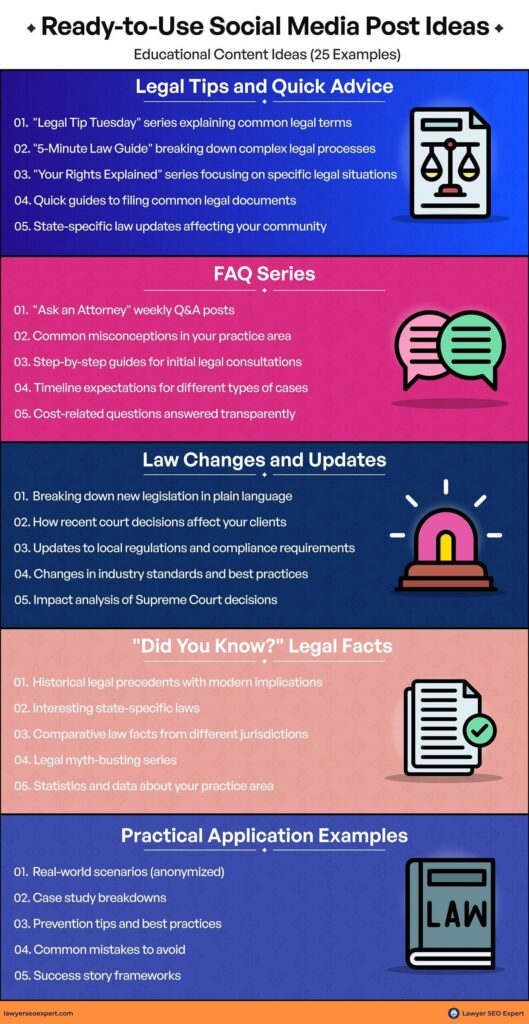
Legal Tips and Quick Advice
- “Legal Tip Tuesday” series explaining common legal terms
- “5-Minute Law Guide” breaking down complex legal processes
- “Your Rights Explained” series focusing on specific legal situations
- Quick guides to filing common legal documents
- State-specific law updates affecting your community
Example Post:
- An apology can be seen as admitting fault
- Insurance companies may use it against you
- It could affect your compensation
- Check for injuries
- Call 911
- Document the scene
FAQ Series
- “Ask an Attorney” weekly Q&A posts
- Common misconceptions in your practice area
- Step-by-step guides for initial legal consultations
- Timeline expectations for different types of cases
- Cost-related questions answered transparently
Example Post:
Law Changes and Updates
- Breaking down new legislation in plain language
- How recent court decisions affect your clients
- Updates to local regulations and compliance requirements
- Changes in industry standards and best practices
- Impact analysis of Supreme Court decisions
Example Post:
“Did You Know?” Legal Facts
- Historical legal precedents with modern implications
- Interesting state-specific laws
- Comparative law facts from different jurisdictions
- Legal myth-busting series
- Statistics and data about your practice area
Example Post:
Practical Application Examples
- Real-world scenarios (anonymized)
- Case study breakdowns
- Prevention tips and best practices
- Common mistakes to avoid
- Success story frameworks
Example Post:
- Received a trademark infringement letter
- Was using a similar logo unknowingly
- Faced potential lawsuit
- Immediate cease & desist compliance
- Negotiated with trademark owner
- Designed phase-out period
- Created new branding strategy
Engagement-Focused Posts (25 Examples)
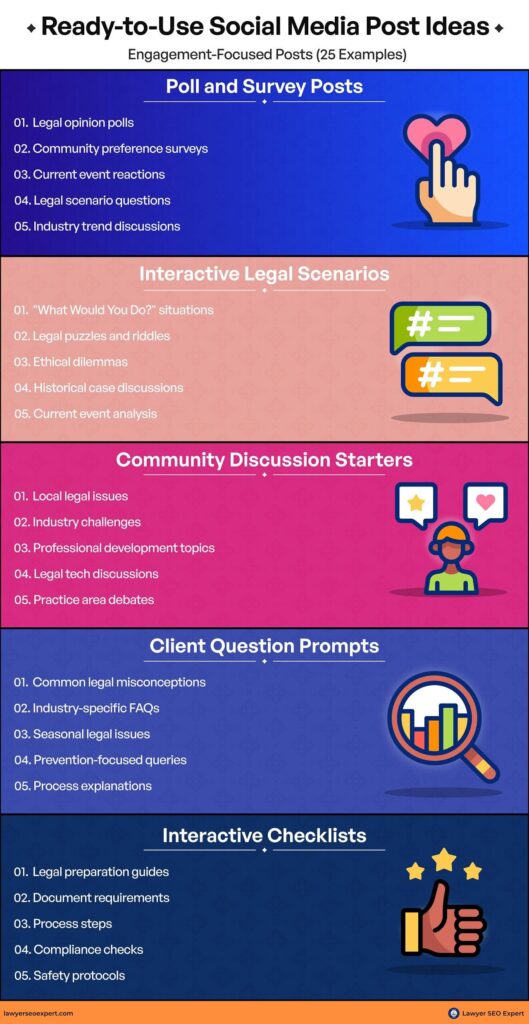
Poll and Survey Posts
- Legal opinion polls
- Community preference surveys
- Current event reactions
- Legal scenario questions
- Industry trend discussions
Example Post:
Interactive Legal Scenarios
- “What Would You Do?” situations
- Legal puzzles and riddles
- Ethical dilemmas
- Historical case discussions
- Current event analysis
Example Post:
Community Discussion Starters
- Local legal issues
- Industry challenges
- Professional development topics
- Legal tech discussions
- Practice area debates
Example Post:
- Clear performance expectations
- Written remote work agreements
- Regular policy updates
Client Question Prompts
- Common legal misconceptions
- Industry-specific FAQs
- Seasonal legal issues
- Prevention-focused queries
- Process explanations
Example Post:
Interactive Checklists
- Legal preparation guides
- Document requirements
- Process steps
- Compliance checks
- Safety protocols
Example Post:
Brand-Building Content Ideas (25 Examples)
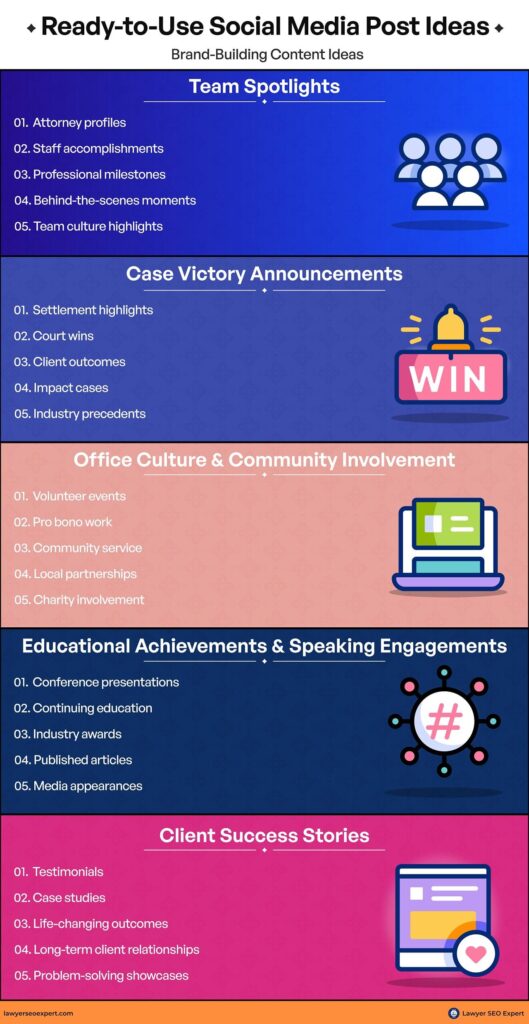
Team Spotlights
- Attorney profiles
- Staff accomplishments
- Professional milestones
- Behind-the-scenes moments
- Team culture highlights
Example Post:
Case Victory Announcements
- Settlement highlights
- Court wins
- Client outcomes
- Impact cases
- Industry precedents
Example Post:
Office Culture & Community Involvement
- Volunteer events
- Pro bono work
- Community service
- Local partnerships
- Charity involvement
Example Post:
Educational Achievements & Speaking Engagements
- Conference presentations
- Continuing education
- Industry awards
- Published articles
- Media appearances
Example Post:
Client Success Stories
- Testimonials
- Case studies
- Life-changing outcomes
- Long-term client relationships
- Problem-solving showcases
Example Post:
- Maria R.
Thought Leadership Posts (26 Examples)
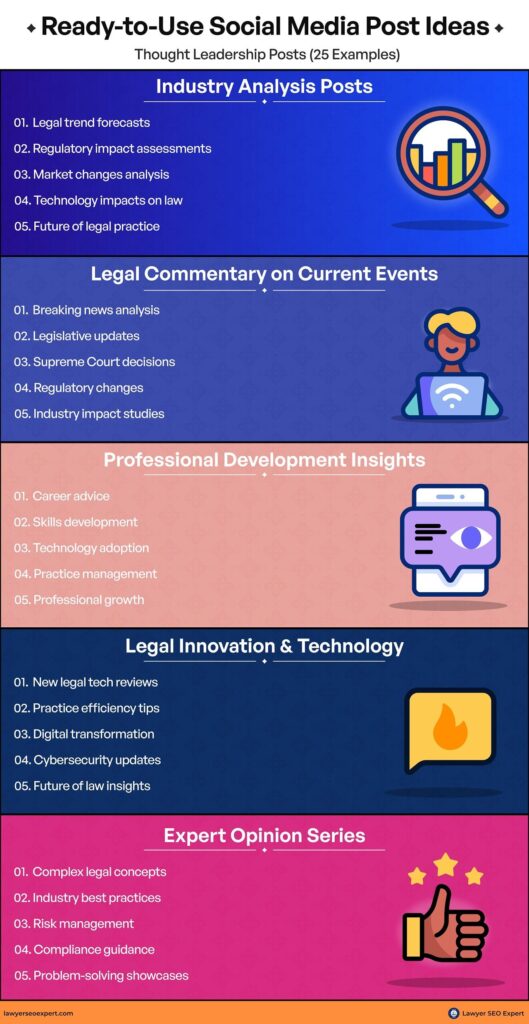
Industry Analysis Posts
- Legal trend forecasts
- Regulatory impact assessments
- Market changes analysis
- Technology impacts on law
- Future of legal practice
Example Post:
- AI in Legal Practice 📈 60% of firms adopting AI tools ⚖️ New AI liability regulations 🤖 Automated document review rising
- Remote Court Proceedings 🏛️ Hybrid hearings becoming standard 📱 Digital evidence protocols evolving 💻 Virtual mediation increasing
- ESG Legal Framework 🌱 New compliance requirements 📊 Mandatory reporting expanding ⚖️ Climate litigation surge
Legal Commentary on Current Events
- Breaking news analysis
- Legislative updates
- Supreme Court decisions
- Regulatory changes
- Industry impact studies
Example Post:
- Previous precedent overturned
- New standard established
- Immediate impact on [area]
- Compliance updates needed
- Policy revision requirements
- Timeline for changes
Professional Development Insights
- Career advice
- Skills development
- Technology adoption
- Practice management
- Professional growth
Example Post:
- Tech Literacy
- eDiscovery tools
- Practice management software
- Virtual collaboration
- Data Analytics
- Case outcome prediction
- Resource allocation
- Performance metrics
- Project Management
- Matter management
- Team coordination
- Client communications
- Digital Marketing
- Online presence
- Content creation
- Social media
- Emotional Intelligence
- Client relations
- Team leadership
- Conflict resolution
Legal Innovation & Technology
- New legal tech reviews
- Practice efficiency tips
- Digital transformation
- Cybersecurity updates
- Future of law insights
Example Post:
- Due diligence
- Contract standardization
- Risk assessment
- Compliance review
Expert Opinion Series
- Complex legal concepts
- Industry best practices
- Risk management
- Compliance guidance
- Strategic planning
Example Post:
- International Data Transfers 🌐 New EU-US framework 📊 Cross-border requirements ✍️ Updated contract clauses
- State Privacy Laws 🗺️ 5 new states added regulations 📱 Consumer rights expanded 💼 Business obligations increased
- AI Data Protection 🤖 Automated processing rules 🔒 Security requirements 📋 Consent management
Efficient Cross-Posting Strategies for Social Media Content
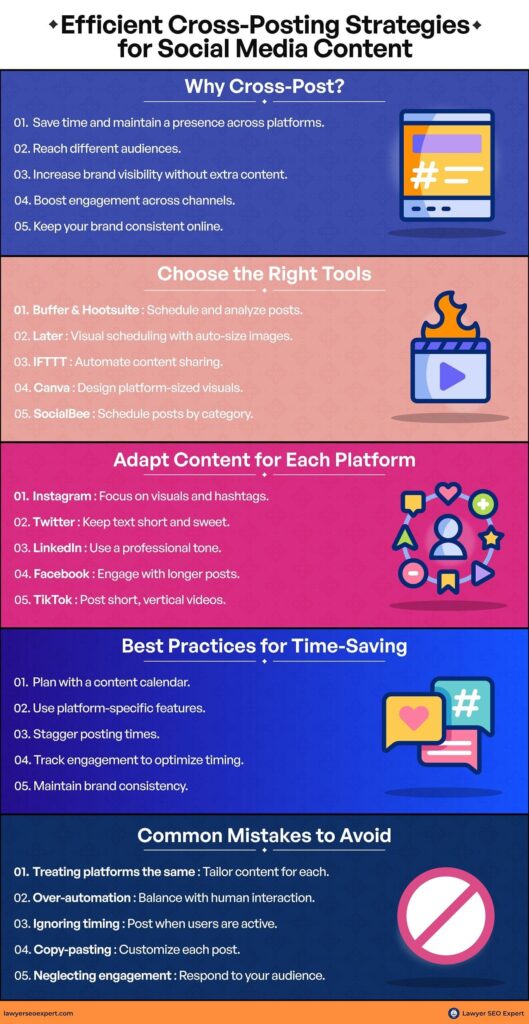
Creating unique content for every social media platform can be exhausting and time-consuming. Smart cross-posting is your secret weapon for maintaining an active presence across multiple platforms without sacrificing quality. Think of it as speaking the same language with different dialects – the story remains the same, but the way you tell it changes based on your audience.
Choose the Right Cross-Posting Tools
The secret to efficient cross-posting lies in selecting the right combination of tools that match your workflow. While Buffer and Hootsuite stand out as comprehensive solutions for scheduling and analytics, they’re just the beginning of your cross-posting toolkit. For businesses heavily focused on visual content, Later offers specialized features that maintain image quality while automatically adjusting dimensions for different platforms. IFTTT (If This Then That) takes automation to the next level by creating custom workflows – imagine automatically sharing your Instagram posts to Twitter with proper image previews, or instantly converting your LinkedIn articles into Medium posts. When it comes to visual adaptations, Canva has become indispensable for social media managers, offering templates precisely sized for each platform’s requirements, ensuring your visuals look professional everywhere they appear.
Adapt Content for Each Platform
While cross-posting saves time, it’s crucial to optimize your content for each platform:
- Instagram: Focus on visual appeal with square images and relevant hashtags
- Twitter: Shorten text and use platform-specific mentions
- LinkedIn: Maintain a professional tone and expand on business insights
- Facebook: Add longer descriptions and engage with community-focused content
- TikTok: Adapt content into short-form vertical videos
Best Practices for Time-Saving Cross-Posting
- Create a content calendar that plans cross-posting in advance
- Use platform-specific features while maintaining your core message
- Stagger posting times to avoid overwhelming your audience
- Track engagement metrics to optimize posting schedules
- Maintain brand consistency across all platforms
Common Cross-Posting Mistakes to Avoid
Many content creators fall into the trap of treating all social media platforms identically, which can significantly diminish their content’s impact. The most frequent mistake is copying and pasting the exact same message across all networks without considering each platform’s unique culture and audience expectations. For instance, using Twitter hashtags on LinkedIn can appear unprofessional, while Instagram-style captions might feel out of place on Facebook. Another critical error is ignoring the optimal timing for different platforms – what works for your Facebook audience at 9 AM might not resonate with your LinkedIn followers until lunchtime. Over-automation is perhaps the most damaging mistake, where content is robotically distributed without human oversight, leading to tone-deaf posts during sensitive global events or missing out on real-time engagement opportunities. The key is finding the right balance between automation and authentic human interaction, ensuring your cross-posted content maintains its relevance and engagement potential across all platforms.
Using AI to Generate Engaging Social Media Content Ideas for Law Firms
I know you’re thinking about using AI for content ideas. But AI generally give you very generic output and very limited ideas. Here’s how you should use AI for tons of unique ideas:
Step 1: Getting Started with AI Content Ideation
The secret lies in crafting law-specific prompts that generate relevant content ideas. Instead of generic requests, try specific prompts like “Generate five educational posts about recent changes in family law” or “Create a week’s worth of posts highlighting client success stories without breaching confidentiality.” For example, if your firm specializes in personal injury, you might prompt “Suggest 10 posts about workplace safety tips that demonstrate our expertise while providing value to potential clients.” Remember to include your jurisdiction and practice areas in your prompts for more targeted results.
Step 2: Best AI Tools for Social Media Brainstorming
While ChatGPT and Claude excel at generating professional legal content frameworks, specialized tools like Jasper offer templates perfect for law firm social media. For instance, you can generate variations of “Did You Know?” posts about common legal misconceptions or create engaging explanations of complex legal terms for your audience. Use these tools to brainstorm ideas.
Step 3: Turning AI Suggestions into Authentic Content
Transform AI-generated ideas into authentic content by incorporating your firm’s unique perspective and experience. When AI suggests a topic like “Understanding Estate Planning Basics,” enhance it with real scenarios you’ve handled (while maintaining client confidentiality). For example, turn a basic AI suggestion about “The Importance of Wills” into an engaging story about how proper estate planning helped a family avoid common pitfalls. Use your actual courtroom experiences and client interactions to add depth to AI-generated frameworks.
Tips for Maintaining Brand Voice with AI
For law firms, maintaining a professional yet approachable tone is crucial. In your AI prompts, specify something like “Use a professional, authoritative tone while making legal concepts accessible to non-lawyers.” If your firm handles sensitive matters like family law or criminal defense, include instructions like “Maintain an empathetic tone while discussing legal challenges.” Create templates for different content types: educational posts about legal rights, celebratory posts about firm achievements, or community involvement updates.
Pro Tip: Create a monthly content calendar where you batch-generate ideas for different practice areas. For instance, dedicate Mondays to personal injury tips, Wednesdays to family law insights, and Fridays to firm culture and community involvement posts.
Conclusion
Creating engaging social media content for your law firm doesn’t have to be a daunting task. With these 101 post ideas as your foundation, you can build a robust content calendar that educates, engages, and converts followers into clients. Remember: consistency trumps perfection. Start with 2-3 post types that resonate most with your audience and gradually expand your content mix. Track engagement metrics to understand what works best for your firm, and don’t forget to inject your unique personality and expertise into each post. The most successful law firm social media accounts balance professional authority with authentic human connection. Now it’s your turn – which of these ideas will you implement first?
FAQs:
1. How often should law firms post on social media?
Aim for 3-5 posts per week on your primary platform (typically LinkedIn or Facebook for law firms). For secondary platforms, maintain at least 2-3 posts per week. Consistency matters more than frequency – it’s better to post reliably twice weekly than sporadically on a daily basis.
2. How can we maintain client confidentiality while sharing case studies and success stories?
Always obtain explicit client permission before sharing any case details. Alternatively, anonymize stories by changing identifying details while maintaining the core message. Focus on the legal process and outcomes rather than specific client information. Consider creating composite examples that combine elements from multiple similar cases.
3. Which social media platforms should law firms prioritize in 2024?
LinkedIn should be your primary focus for B2B and professional networking. Facebook works well for family law, estate planning, and personal injury practices. Instagram is increasingly important for reaching younger clients. TikTok is emerging as a platform for educational legal content, especially for firms targeting younger demographics. Choose platforms based on your target client demographic and practice areas.
4. How can we measure the ROI of our social media efforts?
Track these key metrics:
- Consultation requests originating from social media
- Website traffic from social platforms
- Engagement rates (comments, shares, saves)
- Growth in followers
- Time spent on website pages linked from social posts
- Lead quality from social media versus other channels
5. What’s the best way to handle negative comments or reviews on social media?
Respond promptly and professionally, but never engage in legal discussions publicly. Acknowledge concerns, offer to take the conversation offline, and provide contact information for resolution. Have a crisis communication plan ready for sensitive situations. Consider setting up social media policies and response templates for your team.